


 Deutsch
 English
 Español
 Français
 Nederlands
 Português


 Share
Share




Geoeconomic confrontation has overtaken armed conflict as the single most likely trigger of a global crisis in 2026, according to the World Economic Forum's Global Risks Report 2026. The survey of more than 1,300 leaders found 18% cite geoeconomic confrontation as the top crisis trigger, compared with 14% for state-based armed conflict. Half expect a 'turbulent' or 'stormy' two-year period, and 68% foresee a more fragmented world by 2036.
What is geoeconomic confrontation?
Geoeconomic confrontation is the strategic use of tariffs, export controls, sanctions, investment screening, and supply-chain restrictions to gain advantage over rivals. These measures target critical dependencies such as semiconductors, rare earth minerals, and energy infrastructure. The WEF calls the current period an age of competition in which economic power is wielded as deliberately as military force. More than 18,000 discriminatory trade measures have been introduced since 2020.
Why 2026 marks a turning point
Economic risks climbed sharply in the two-year outlook: economic downturn and inflation each rose eight places, while asset bubble risk jumped seven positions. US effective tariff rates have risen from about 2.4% in late 2024 to more than 12% in early 2026, with targeted rates on electric vehicles and batteries exceeding 100%, according to CNBC reporting. Over 72% of trade professionals say US tariff volatility is now the most impactful change in their operating environment.
Critical minerals become the new battlefield
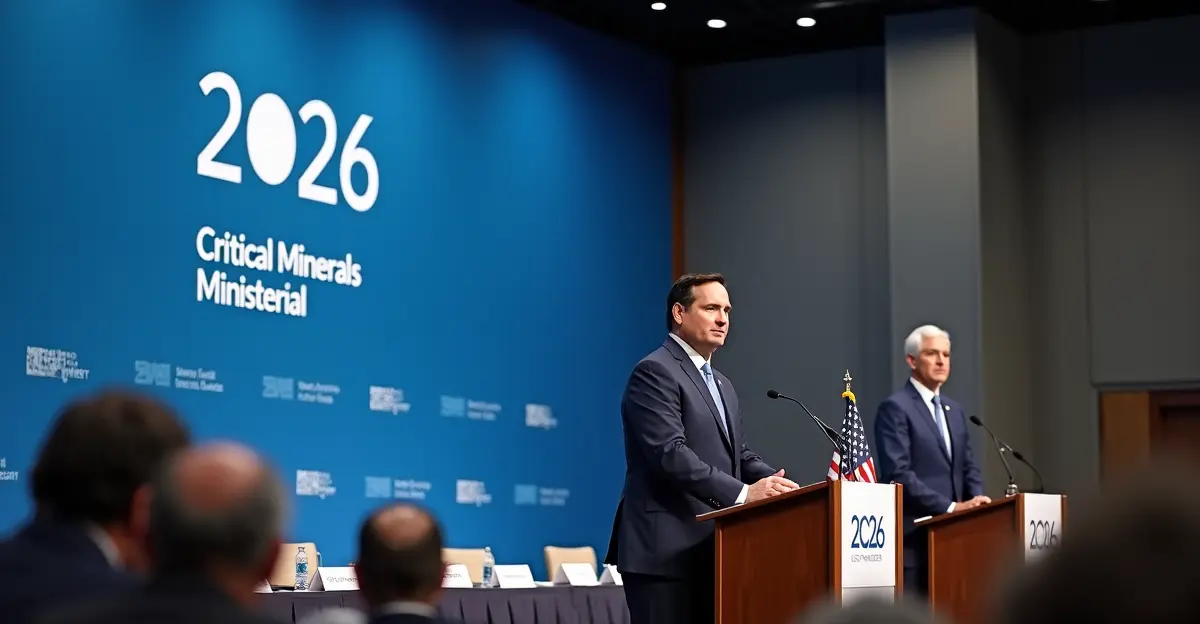
China processes roughly 90% of the world's rare earth elements, giving Beijing leverage over batteries and defense electronics. Washington has accelerated the FORGE initiative and a reported $10 billion Project Vault, while the EU's Critical Raw Materials Act sets targets to reduce dependence within 12–18 months. Critical mineral supply chains have become arenas of geopolitical influence rather than purely commercial networks.
Technology decoupling accelerates
Export controls on advanced chips, lithography equipment, and AI hardware are widening the US-China split. The WEF report shows adverse AI outcomes jumped from 30th place in the two-year ranking to 5th over ten years, while semiconductor export controls remain central to national security and corporate risk planning.
How corporations are rewriting strategy
Multinational companies are shifting from efficiency to resilience. The report finds 65% of multinationals are permanently restructuring sourcing, 57% have renegotiated supplier contracts, and 51% are nearshoring. Mexico has overtaken China as the largest US trading partner, while Vietnam, India, and ASEAN economies have emerged as new hubs. Political risk scoring is now embedded in procurement, and 40% of firms use AI or blockchain for supply chain resilience mapping, up from 6% a year earlier. Key actions include:
- Diversifying supplier bases across friendly and neutral jurisdictions
- Stress-testing tariff and export-control scenarios
- Regionalizing inventory and production footprints
Impact and implications
The fragmentation carries real costs. The IMF warns friendshoring could reduce global output by about 2%, with developing nations facing GDP losses of up to 6%. Global trade growth is projected to slow to 1.5–2.6% in 2026. A multipolar global economy also raises sovereign risk, as governments weaponize access to capital, technology, and raw materials.
Expert perspectives
Geoeconomic confrontation is not a single shock but a structural condition, said Saadia Zahidi, WEF Managing Director. It offers an early warning system as the age of competition compounds global risks. Analysts at global risk advisory firms say supply chains now require permanent resilience rather than one-off contingency plans.
FAQ
What is geoeconomic confrontation?
It is the strategic use of tariffs, export controls, sanctions, investment restrictions, and supply-chain limits to gain advantage over rivals.
Why did geoeconomic confrontation overtake armed conflict in 2026?
The WEF survey found 18% of leaders selected it as the most likely crisis trigger, compared with 14% for armed conflict, reflecting the rapid expansion of trade measures since 2020.
Which sectors are most exposed?
Critical minerals, semiconductors, clean energy hardware, and cross-border technology supply chains face the highest restrictions.
How should companies respond?
Firms should diversify sourcing, adopt political risk scoring, stress-test tariff scenarios, and build regionalized inventory buffers.
Conclusion
Geoeconomic confrontation is no longer a tail risk; it is the baseline for 2026 planning. Economic weaponization now sets the terms for trade, investment, and diplomacy, making resilience the new competitive advantage.



Follow Discussion